How it works

From market insight to conversations with the right candidates.

For every role we map the market first. Then we decide who really fits, how best to reach those people and which story is relevant to them.

Our team runs the campaign under your name. You talk to the candidates who are interested.

01The market first

First, know who is in the market.

Good recruitment starts with a sharp picture of the audience.

We start with the role, the team and the people you are looking for. Then we map the market and assess candidates on experience, responsibilities and other signals that matter for the role.

So you see up front how many suitable candidates there are, where they work and where you may have to make choices.

Example of a market scan
candidates in the market 412
within your region 260
relevant profiles 120
strong match 46

So you get a view of the market first. Then we start the campaign.
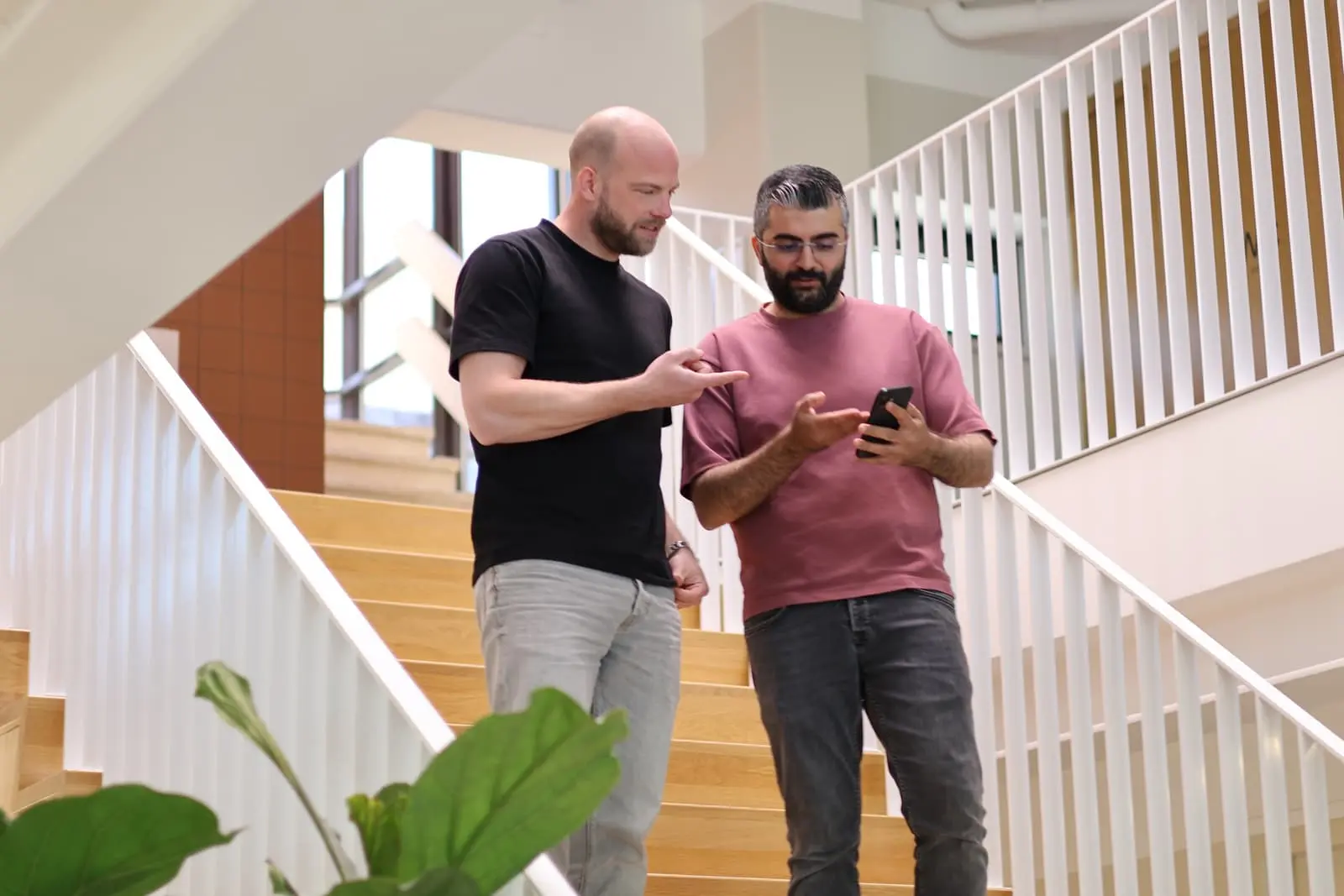
Jan Pieter and Farhad looking at a candidate profile together
02The selection

A job title tells you nowhere near everything.

So for each candidate we look at what the profile actually says. What has this person done? Where does the experience sit? Which step would make sense? And which parts of your role connect to that?

Our technology helps us make that selection faster and more consistent. Our team reviews the results and decides which candidates we actually approach.

That avoids broad lists of people who fit on paper but have little to do with the role in substance.

03The story

Your story, shaped around the candidate.

Not every candidate needs the same story.

For each person we decide why the role could be interesting and which context helps. We keep the first contact short. Anyone who wants to look further lands on a personal careers page.

That gives someone enough context to decide whether a conversation is worth having, without wading through a long job ad first.

On that page the candidate sees, for example
why we approached this person in particular
what the role involves
what the team is working on
which experience lines up well
what could make a next step interesting
04Under your name

The campaign runs under your name.

From the first contact, the candidate sees your organisation.

Messages go out from your account or from someone on your team. The personal page matches your employer story. If someone is interested, they book a conversation straight into your calendar.

We follow up on replies, answer the first questions and keep the contact going.

You take over as soon as a real conversation is needed.

The timeline

This is what four weeks looks like.

Week 1

Market and audience

We go through the role, map the market and make the first selection.

You see how many candidates there are and which profiles we want to approach.

Weeks 2 and 3

Campaign

We start the outreach under your name.

For each candidate we decide on the right angle and, where it helps, build a personal careers page.

We follow up on replies straight away.

Weeks 3 and 4

Conversations

Interested candidates book a conversation in your calendar.

For every conversation you get a short briefing with the profile, our assessment and what has already been discussed.

The first conversations can come in earlier.

Sight of the process

You keep sight of what is happening.

You do not have to run the process yourself, but you can follow what is happening.

Progress

You see who we approached, who replies and which conversations are scheduled.

Replies

You see what candidates say back and where interest is building.

Adjusting

If the market responds differently than expected, we adjust the audience or the story.

Insight

Candidates, messages, replies and scheduled conversations stay visible to your team.

Why we built it this way

Why we built it this way.

We worked at LinkedIn for years and saw there how companies organised recruitment.

The problem usually was not that they had no idea who they were looking for. The work was in the step after that: mapping the market properly, selecting the right people and reaching them in a way that is relevant.

So we built HeyHuma.

We combine recruitment experience, our own technology and a team that does the work. So you do not get another tool to manage. We use the technology to run the campaign for you.

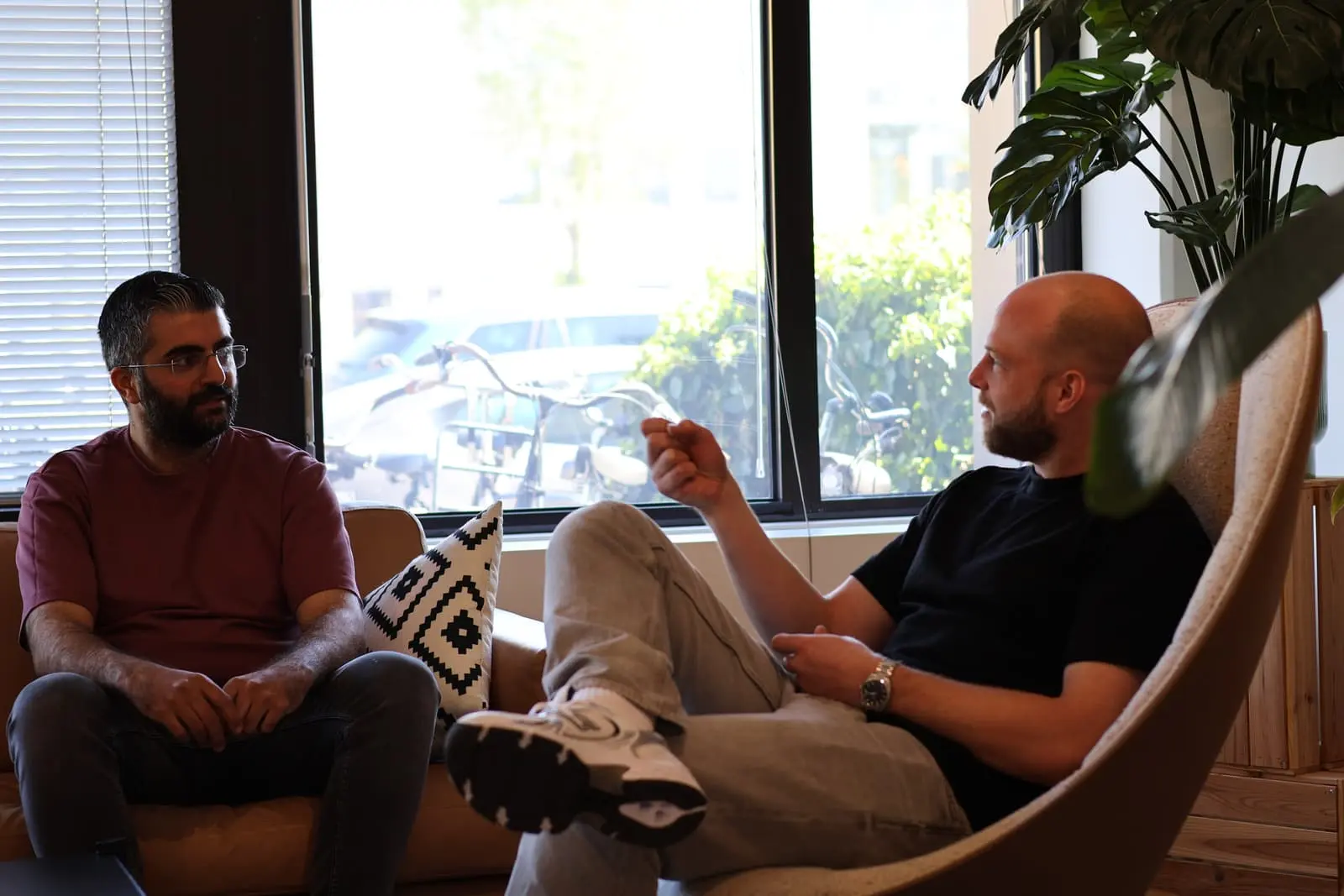
Farhad and Jan Pieter talking at the office
What it builds

What you build with it.

A campaign produces conversations, but it does not stop there.

The connections are made under your name. Candidates who do not want to move today will know your organisation afterwards. Replies give you more insight into what the market cares about. And for the next role you start with more existing relationships.

So with every campaign you build your own network further.

Every campaign adds connections to your organisation's network.

The approach in numbers

The approach in numbers.

43%

average reply rate among the candidates we approach.

Measured across all our recruitment campaigns in the first half of 2026.

70 intro conversations in three months

For one client with temporary extra sourcing capacity.

Senior Project Manager within one month

For DTC Agency.

Several roles at once

For faqta, with strong candidates in a short time and positive reactions to the approach.

See client stories

The visibility layer

Reach candidates who are looking, too.

Our direct campaigns are aimed mainly at people who are not actively looking.

For candidates who are looking around, we can make the same role visible through Meta, LinkedIn and relevant job boards.

That way you reach both halves of the market from one employer story.

See recruitment marketing →

FAQ

Questions, answered.

How is HeyHuma different from an agency?

An agency usually recruits from its own network and under its own brand. We run the campaign under your name. The relationships and the network that come out of it stay with your organisation.

How do you make sure the communication fits us?

Before we start we go through how you or your team normally communicate. We use that style as the basis for the campaign and show you in advance how we approach candidates.

What do you need to start?

An intake about the role, the team and the profile you want. After that we can map the market and make the first selection.

How quickly can you start?

The first market scan is usually ready within a week. The campaign can start after that.

Can you work with our CRM or ATS?

Where possible we connect to the systems you already use.

Want to see what this looks like for your role?

Tell us who you want to hire. We show you how we would define the market, which candidates are interesting and how we can reach that group.

After the conversation you know whether HeyHuma fits the role.

Book a 15-min intro

Cookies op HeyHuma

We gebruiken cookies om onze website goed te laten werken en inzicht te krijgen in het gebruik ervan. Cookiebeleid

Google AnalyticsHelpt ons begrijpen hoe bezoekers de website gebruiken, zodat we deze kunnen verbeteren.
Google Ads & MetaMeten of onze eigen advertenties tot geboekte gesprekken leiden. Alleen actief na jouw toestemming.
Cal.comWordt gebruikt wanneer je via onze website een afspraak inplant. Cal.com kan hiervoor functionele cookies plaatsen.

Je kunt zelf kiezen of je analytische en marketingcookies accepteert. Functionele cookies die nodig zijn om een afspraak te maken, worden alleen gebruikt wanneer je de afspraakmodule gebruikt.

{{ t.brand }}
{{ t.cta }}
{{ t.hero.eyebrow }}

{{ t.hero.h1pre }}{{ t.hero.h1accent }}

{{ t.hero.sub }}

{{ t.hero.sub2 }}

01{{ t.markt.eyebrow }}

{{ t.markt.h2 }}

{{ t.markt.lead }}

{{ t.markt.p1 }}

{{ t.markt.p2 }}

{{ t.markt.scanTitle }}
{{ row.label }} {{ row.num }}

{{ t.markt.scanNote }}

{{ t.selectie.imgAlt }}
02{{ t.selectie.eyebrow }}

{{ t.selectie.h2 }}

{{ t.selectie.p1 }}

{{ t.selectie.p2 }}

{{ t.selectie.p3 }}

03{{ t.verhaal.eyebrow }}

{{ t.verhaal.h2 }}

{{ t.verhaal.lead }}

{{ t.verhaal.p1 }}

{{ t.verhaal.note }}

{{ t.verhaal.listTitle }}
{{ item }}
04{{ t.onderNaam.eyebrow }}

{{ t.onderNaam.h2 }}

{{ t.onderNaam.lead }}

{{ t.onderNaam.p1 }}

{{ t.onderNaam.p2 }}

{{ t.onderNaam.p3 }}

{{ t.weken.eyebrow }}

{{ t.weken.h2 }}

{{ phase.week }}

{{ phase.title }}

{{ phase.p1 }}

{{ phase.p2 }}

{{ phase.p3 }}

{{ t.zicht.eyebrow }}

{{ t.zicht.h2 }}

{{ t.zicht.lead }}

{{ item.title }}

{{ item.body }}

{{ t.waarom.eyebrow }}

{{ t.waarom.h2 }}

{{ t.waarom.p1 }}

{{ t.waarom.p2 }}

{{ t.waarom.p3 }}

{{ t.waarom.p4 }}

{{ t.waarom.imgAlt }}
{{ t.opbouw.eyebrow }}

{{ t.opbouw.h2 }}

{{ t.opbouw.lead }}

{{ t.opbouw.p1 }}

{{ t.opbouw.p2 }}

{{ t.opbouw.caption }}

{{ t.cijfers.eyebrow }}

{{ t.cijfers.h2 }}

{{ t.cijfers.leadNum }}

{{ t.cijfers.leadBody }}

{{ t.cijfers.leadSource }}

{{ item.value }}

{{ item.body }}

{{ t.cijfers.link }}

{{ t.visibility.eyebrow }}

{{ t.visibility.h2 }}

{{ t.visibility.p1 }}

{{ t.visibility.p2 }}

{{ t.visibility.p3 }}

{{ t.visibility.link }}

{{ t.faq.eyebrow }}

{{ t.faq.h2 }}

{{ item.q }}

{{ item.a }}

{{ t.closing.h2 }}

{{ t.closing.p }}

{{ t.closing.ctaPrimary }}

{{ t.closing.microcopy }}

{{ t.cta }}